


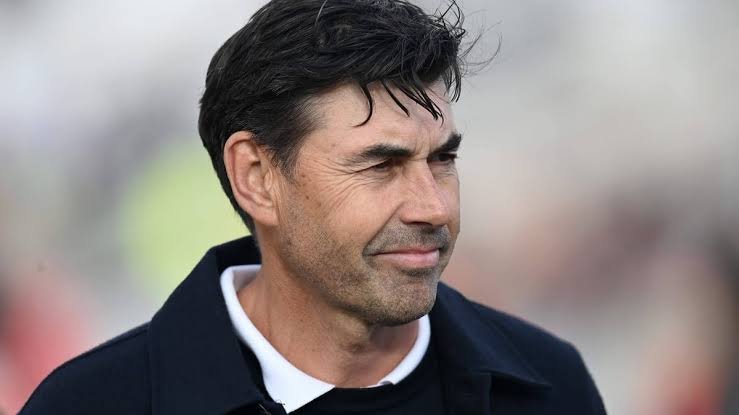
Stephen Fleming, the new Test coach of England, is of the opinion that the position should be held by an Englishman in the most optimal scenario. He has committed to prioritizing the development of English coaches during his tenure.
Fleming is the second New Zealander to hold the position in a row, having agreed to succeed Brendon McCullum on a four-year contract earlier this year. This is a continuation of the trend of England recruiting Test coaches from abroad, as only two Englishmen have held the position on a full-time basis in the 21st century: Peter Moores (2007-09 and 2014-15) and Chris Silverwood (2019-22).
Some of the potential future Test coaches on Fleming’s newly appointed support staff include Marcus Trescothick, James Foster, and Richard Dawson, who previously served as interim Test coaches earlier this year. Mike Yardy has been appointed national batting lead at the ECB, and Jonathan Trott, another former England player, will coach the England Lions this winter. Fleming stated on BBC Radio 5 Live, “I do believe that, primarily, the national team should be coached by a national representative.”
“I am appreciative of the opportunity, but there will be some improvement in the coaching. Our staff has returned to the system, and I am extremely pleased about it. I am eager to collaborate with them, but the development of English coaches is a primary concern.”
Dawson resigned from his position as Glamorgan’s head coach earlier this month to assume a dual role as the national spin-bowling lead and one of Fleming’s assistants. Rob Key, England’s managing director, suggested that Dawson would be “near the top of that list” when the time comes to appoint Fleming’s successor in the future.
Fleming also reiterated his intention to incorporate certain county coaches into the England team when their schedules permit in order to facilitate their professional development.
“It is also my aspiration to have county coaches introduce themselves at specific times, and to have former players return,” he stated. “It is truly inclusive and characterized by a relaxed approach to utilizing the available resources, while also ensuring that the county game and the English game are operating as intended.”
Fleming will not assume responsibility for his inaugural series until England’s December trip to South Africa, during which time Trescothick will serve as his replacement for the victory over Pakistan in August-September. In stark contrast to McCullum, Fleming conducted a fact-finding mission in the United Kingdom last month and expressed his intention to replicate the experience in anticipation of the upcoming Ashes series.
Fleming replied, “Yes, I will be present.” This year, I found it to be quite enjoyable to reconnect with many of the individuals with whom I played, many of whom are now in positions of leadership or coaching at individual counties. It was a pleasure to reconnect with those individuals and gain a comprehensive understanding of the current state of the county game. This will be a critical component of the ongoing development of participants.
Fleming also strongly suggested that England will continue to operate without a frontline spinner in South Africa, instead relying on part-time options in Jacob Bethell, Dan Lawrence, and Joe Root. “Pitch conditions are becoming slightly more conducive to seamers in Test cricket,” he stated. “Games are concluded within a maximum of three and a half to four days.” Due to the introduction of drop-ins, the deterioration of numerous wickets is not as prevalent as it once was. Consequently, spinners are facing an increased level of difficulty.
Also Read : Steve Smith Highlights Anxiety After Head Blow
“The Bethells, the Lawrences, and the Roots are just a few examples of the part-time spinners that are on the rise.” And when that is combined with four seamers, it is a sufficient – or more than sufficient – attack to survive a Test match. Consequently, the dynamic has significantly altered at this time.









Discussion about this post