

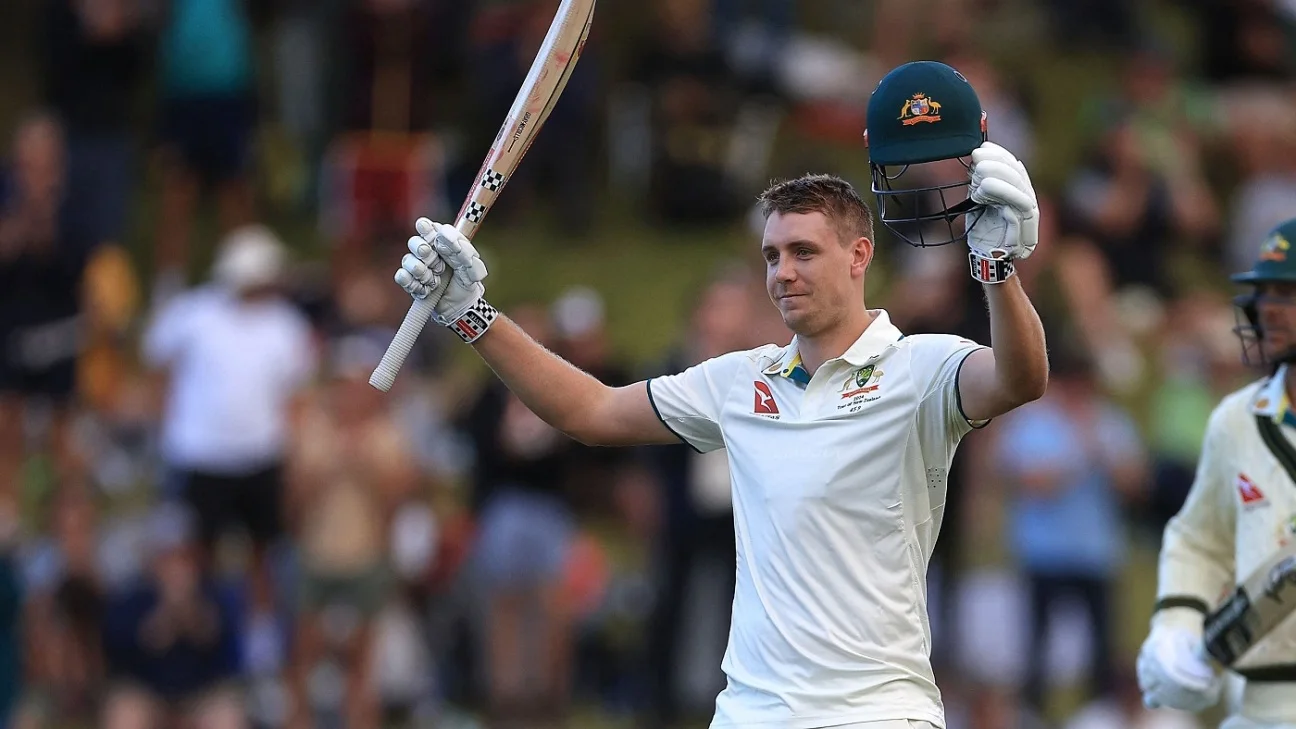
Cameron Green is confronted with a constrained timeframe to be available for the second Test against South Africa, as he has not yet resumed batting following the abdominal injury he sustained in the final ODI late last month.
On the final day of the Durban Test, Green conducted running drills on the outfield during lunch. There is some optimism that he will be able to contribute to the series, despite the fact that head coach Andrew McDonald had previously stated that Green was unlikely to bowl in the series, even if he were able to play as a batsman..
Josh Inglis, on the other hand, has resumed his duties in the nets after reentering the squad following his fractured finger in the first ODI. He will intensify his training regimen during the training sessions in Gqeberha, which commence on Thursday. Sam Harper is currently included in the squad as a backup wicketkeeper. McDonald stated that Green is making good progress following Australia’s victory in Durban. “He has a few tasks to complete within the next three to four days.”
He will make progress in that regard, and it can accelerate rapidly as a result of a soft tissue injury.During lunchtime, Josh had a few smashes from the back of the nets during this Test match, and they were successful. The primary focus will be on the splint’s comfort and its progression. He will conduct bat-versus-ball sessions in PE [Gqeberha], during which we will acquire additional information.
In the event that Green becomes available in either Gqeberha or Cape Town, room in the middle order would need to be created for him. This could result in a further batting reshuffle or potentially place Beau Webster under pressure to maintain his position.
In the August series against Bangladesh, Green was the most effective batter for Australia.
In Durban, Australia’s batted order was restructured as a result of his injury. Matt Renshaw was relegated to the fifth position, and Nic Maddinson was brought in to open alongside Travis Head. Pat Cummins was a major proponent of this change. Renshaw delivered one of the most remarkable Test performances, scoring 272 runs in both innings. Additionally, he contributed with the ball, claiming two wickets in the final innings.
“We revisit all of the options and determine the optimal course of action at this juncture.” McDonald stated that this was the outcome of their final phone calls for Durban. “We did not make that decision until two days later, following our strategy meeting.” I believe that the most satisfying aspect of our group is that the players are willing to adopt the role that we envision as a collective and can successfully execute and win a Test match.
McDonald shared Cummins’ perspective that the batting order was not a fixed proposition.
“I suppose the external perspective on that is that you require specific orders at specific times, and this individual is a middle-order player, while this individual is an opener,” he stated. “I believe that we are more receptive than that.” Therefore, we will evaluate the necessary actions for the upcoming Test on a different surface. We are uncertain as to the specifics of the situation, but we will address the position of Renners [Renshaw] in the lead-up to the next Test.
Given the convincing nature of the Durban victory, it is unlikely that Australia will make personnel changes, even if positional ones remain a possibility, if Green does not qualify for the second Test. With the same gap into the final Test in Cape Town, unless any of the quicks pulls up sore in the four-day turnaround.
At Kingsmead, the workload was distributed equitably: Mitchell Starc bowled 33 overs, Josh Hazlewood 32.5, and Cummins 29. Nathan Lyon’s ability to exert control in both innings was instrumental in their success, and their bowling was bolstered by exceptional catching. Michael Neser and Scott Boland are the additional pace bowlers in the squad.
Also Read : Sikandar Raza Considers Home World Cup Before Retirement a Blessing
McDonald stated, “We will evaluate the current status of all parties within the next few days.” “There is a significant amount of work to be done in that area, but our SSSM [sports science sports medicine] team is of paramount importance to us, particularly in the context of the cohort of fast bowlers who are not getting any younger.” The management and the investment they made in their own bodies to prepare for the event are commendable, and you can observe this.

A dedicated cricket contributor at CricTonic, focused on bringing readers timely news, match developments, team updates, and thoughtful analysis while following the biggest stories and conversations shaping the game.







Discussion about this post